
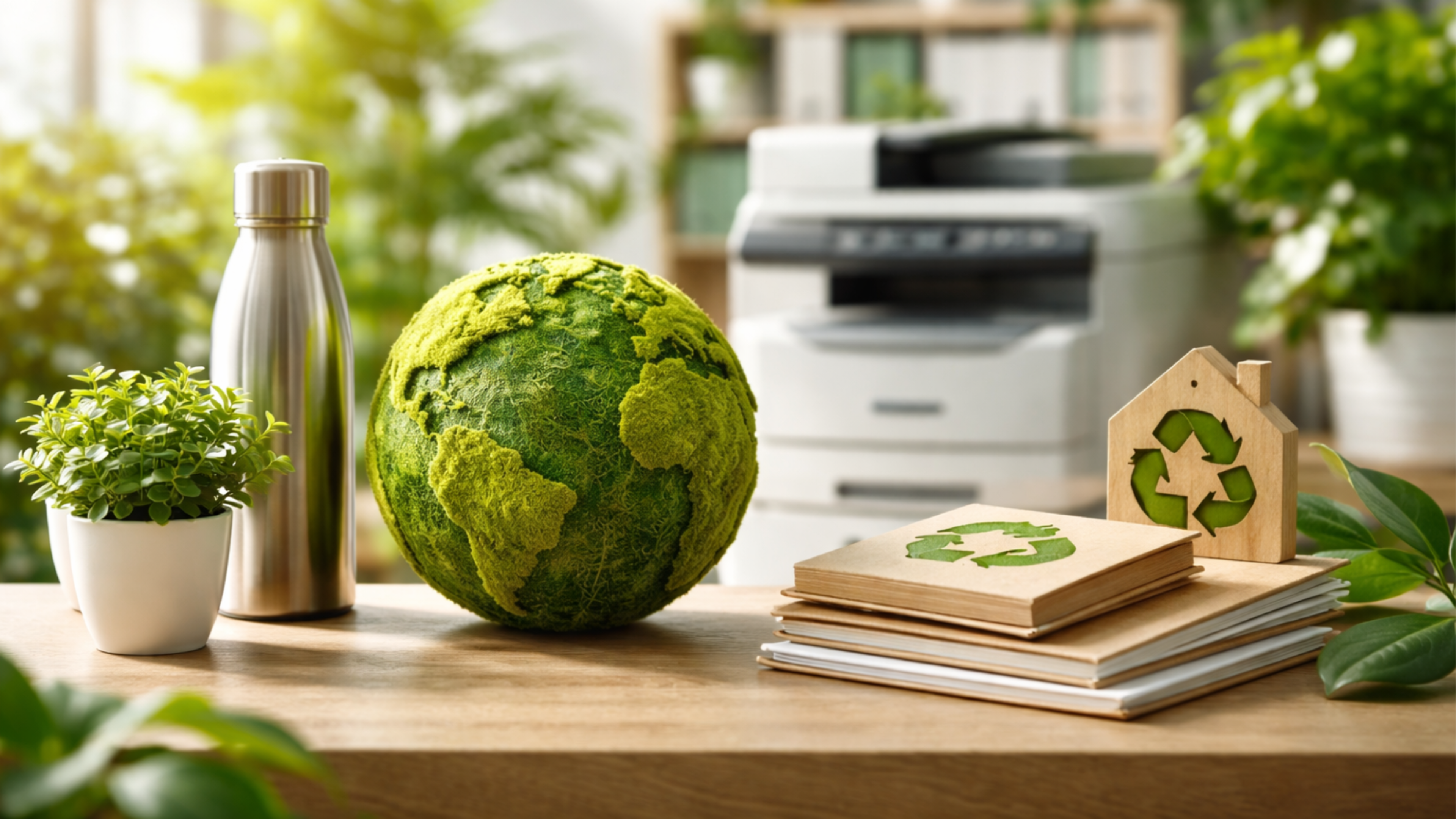
Sustainability is no longer a “nice to have” for businesses, it’s an expectation. But for many organisations, the idea of going green comes with a concern: won’t it be expensive?
The good news is that creating a more environmentally friendly office doesn’t have to increase your costs. In fact, with the right approach, it can actually save your business money while improving efficiency and employee wellbeing.
Here’s how to build a greener office, without stretching your budget...
Reduce Energy Waste First
Before making big changes, start by tackling energy waste.
Simple actions can make a noticeable difference:
• Switch off lights, monitors, and devices when not in use
• Use motion sensors in low-traffic areas
• Replace outdated bulbs with energy-efficient LED lighting
• Optimise heating and cooling systems
Tip: Energy efficiency is one of the fastest ways to cut both carbon emissions and operating costs.
Rethink Your Printing Habits
Printing can be one of the biggest sources of waste in offices - but it’s also one of the easiest areas to improve without increasing costs.
Modern MFPs are designed to be far more energy-efficient and cost-effective than older devices.
Practical steps include:
• Replacing outdated printers with energy-efficient MFPs
• Consolidating multiple devices into fewer, more efficient machines
• Setting default print rules (duplex, black & white)
• Using secure print release to avoid uncollected documents
• Monitoring usage to identify waste and inefficiencies
By managing print more effectively, businesses often cut costs on paper, ink, and maintenance, while also reducing waste.
Buy Smarter, Not More
Sustainability isn’t about spending more, it’s about making better choices.
When purchasing office supplies or furniture:
• Choose durable, long-lasting products over cheap disposables
• Look for recycled or sustainably sourced materials
• Consolidate orders to reduce delivery emissions
Buying less, but better, reduces both environmental impact and long-term costs.
Upgrade Office Furniture Strategically
You don’t need a full office refit to go green.
Instead:
• Reconfigure layouts to maximise what you already have
• Invest in ergonomic pieces that last longer and improve wellbeing
A well-designed workspace can reduce waste, improve productivity, and extend the life of your office assets.
Improve Recycling (and Make It Easy)
Many offices already have recycling systems, but they’re often underused.
To improve results:
• Clearly label bins for different materials
• Place recycling points in convenient locations
• Educate staff on what can and can’t be recycled
Small behavioural changes across a team can significantly reduce landfill waste.
Cut Everyday Waste
Day-to-day habits add up quickly.
Simple swaps include:
• Reusable cups, bottles, and kitchenware
• Bulk purchasing of refreshments instead of single-use items
• Reducing packaging waste where possible
These changes are low-cost but highly visible, helping build a culture of sustainability across your workplace.
Track and Improve Over Time
You don’t need to be perfect from day one.
Start by measuring:
• Energy usage
• Paper consumption
• Waste output
Then set realistic goals and improve gradually. Even small changes, consistently applied, can have a big impact over time.
Final Thoughts
Building a greener office isn’t about spending more, it’s about working smarter.
By reducing waste, improving efficiency, and making more conscious choices, businesses can:
• Lower operating costs
• Reduce environmental impact
• Create a healthier, more productive workspace
The most effective sustainability strategies aren’t the most expensive, they’re the most consistent.
Start small, involve your team, and build momentum. Over time, those small changes will transform your office into a greener, more efficient place to work.
If you’d like to book an appointment to visit our showroom and discuss your office plans, you can request this here.
03456 123858 | ✉️ hello@weaverbomfords.co.uk
Products Selected
